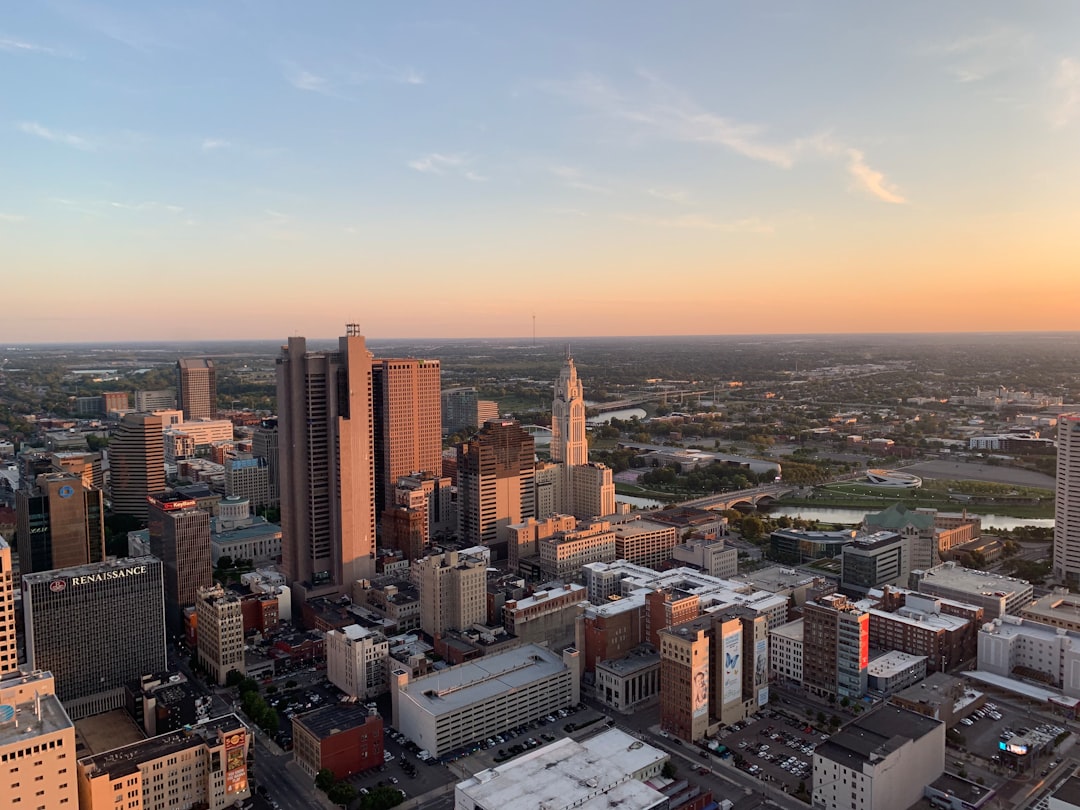
Why this match works: Based on 12 factors including architecture style, street density, coastline type, climate data, and walkability scores. Columbus and Frankfurt share similar urban DNA.
European Twin
Frankfurt
How we calculate the match score
7.1
Architecture
40%
Building styles, rooflines, materials, facade ornamentation
7.6
Street Layout
30%
Road curvature, block size, grid irregularity vs organic growth
8.3
Walkability
30%
Cafés, markets, transit, parks per km²
Tap a score to see how it's measured · Total = Architecture × 40% + Layout × 30% + Walkability × 30%
Why It Feels Like Frankfurt
German Village — 1,500 blocks of original 19th-century German immigrant brick cottages, the largest privately funded historic preservation district in the US — is Frankfurt's Sachsenhausen neighbourhood transported to Ohio. Columbus channels Frankfurt's energy of a mid-sized, university-driven city that punches above its weight culturally; the Short North Arts District's Victorian storefronts and the craft brewery density per capita give Columbus a Frankfurt-meets-Brooklyn quality that routinely surprises visitors.
What's Different from Frankfurt
- • Columbus is larger — 2,100,000 metro vs Frankfurt's urban core
- • American urban planning shows in wider streets and more parking
- • Less centuries-old architecture, but Columbus compensates with preserved historic districts
👁️ AI Vision Check
Click to run our AI vision model on the city photo and score architectural resemblance to Frankfurt.
Top 4 Places to Visit
German Village
historic
Short North
neighbourhood
Scioto Audubon Park
park
North Market
market
Similar European-Style Cities


Want More European-Style Cities?
Explore 348 cities across North America that feel like Europe.